
Pause with Purpose for a Meaningful Response – Guided by Shery Clein, Your MindfulLiving™ Mentor
Cultivating Emotional Intelligence
Congratulations on making it this far! You are on an inspiring journey of self-discovery and growth. Remember, you don’t have to be perfect to be extraordinary. Every step you take toward mindful response is a step toward greater freedom and personal strength.
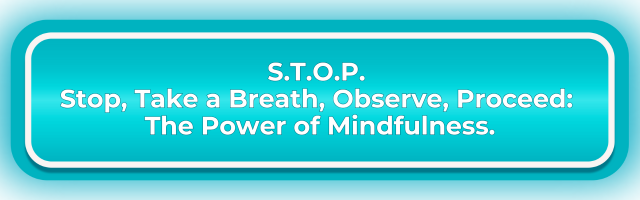
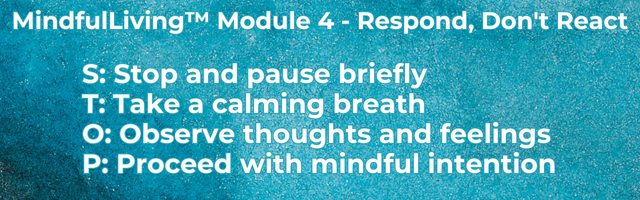
Module 4: Respond Don’t React Formula – STOP: The One-Minute Breathing Space
Read this quote: “Between stimulus and response, there is a space. In that space lies our power to choose our response. In our response lies our growth and our freedom!”
This quote highlights the power of taking a moment to breathe deeply. It is one of the simplest yet most effective ways to reduce stress and influence the outcome of a challenging situation.
The Focus of Module 4: Responding vs. Reacting
- Deep breathing: Sends a calming signal to the brain, instructing the body to relax and lowering heart rate and blood pressure.
- When faced with a stressful situation or an outburst, pause and breathe deeply. This moment of stillness allows you to slow down your automatic stress responses.
- Taking a few deep breaths helps change your physical reaction to stress. It gives your brain—the frontal lobe, which is crucial for considering options and communicating clearly—a moment to process and respond thoughtfully.
- Your higher-thinking brain needs a few seconds to engage fully and positively influence the outcome. During this brief pause, you move from reactive to responsive.
- Dr Jon Kabat-Zinn, in his book Full Catastrophe Living, explains the difference between a stress reaction and a stress response:
- Stress Reaction: Automatic, habitual, and often unconscious.
- Stress Response: A conscious choice made after pausing and assessing the situation.
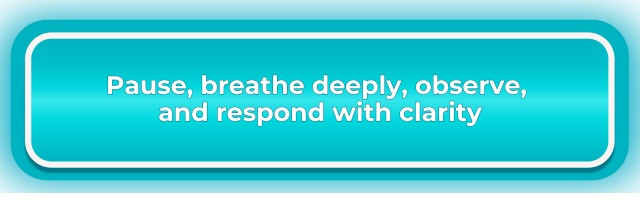
Reacting = Stress and Lack of Thought
Responding = Mindfulness and Thoughtfulness
- Stressful triggers can elevate your stress levels. Without awareness, you may react habitually and unkindly.
- By monitoring your stress levels, paying attention to physical sensations and thoughts, and using deep breathing to create space, you can more easily access a calm and thoughtful response.
- Focus on what you can control in stressful moments—yourself. This approach helps you transition from reacting to responding, leading to better outcomes.
- We have all said things in moments of stress, anxiety, or anger that worsened the situation. Instead of resolving the issue, our stress reactions can intensify it, creating a cycle that needs to be addressed.
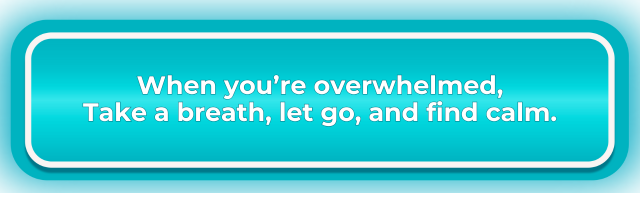
- Allowing yourself a moment to calm down enables you to respond more thoughtfully and compassionately. This “breathing room” allows for more mindful choices.
I appreciate your dedication to this module. Your commitment is truly inspiring. Remember, journaling your experiences helps deepen your practice and supports your growth.
We look forward to continuing this transformative journey with you in the next module. May you be blessed with health, clarity, and prosperity.

Disclaimer: The information provided by Shery Clein, Personal Coach, on www.sheryclein.com is for general informational purposes only. While we strive to provide accurate and up-to-date information, it is not a substitute for professional advice. Please consult with appropriate professionals before making any changes based on the information provided. Thank you.